Understanding Smoking Methods
Two fundamentally different techniques exist for smoking salmon, each producing distinctly different results:
Hot Smoking
Hot smoking cooks the salmon while smoking it, using temperatures between 120-225 degrees Fahrenheit. The result is flaky, fully cooked fish with deep smoky flavor. Hot-smoked salmon can be eaten immediately and is the easier method for home cooks.
Cold Smoking
Cold smoking exposes salmon to smoke at temperatures below 90 degrees Fahrenheit, never actually cooking the fish. This traditional method produces the silky, translucent smoked salmon used for lox and bagels. Cold smoking requires more expertise and specialized equipment.
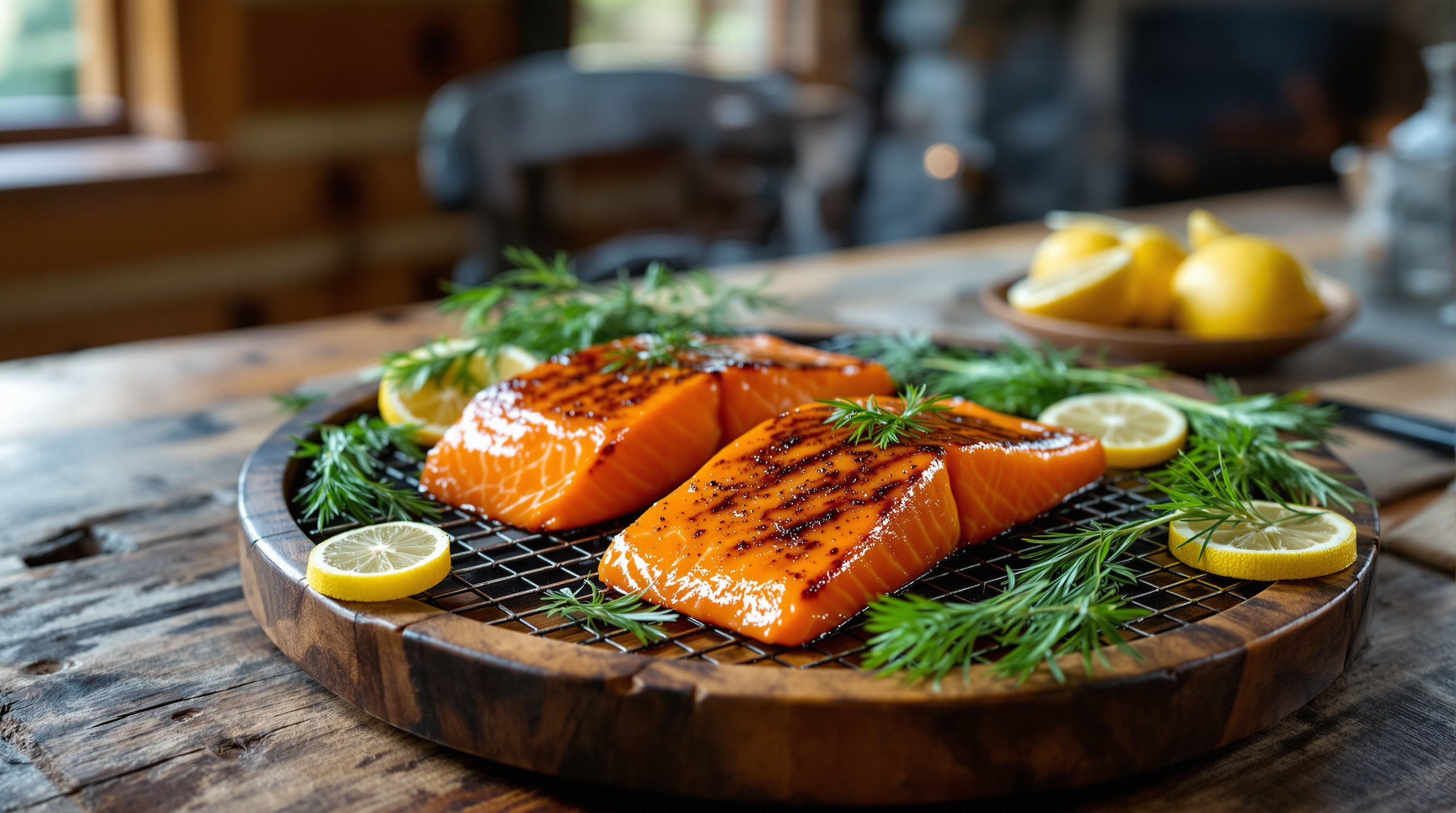
The Curing Process
Both smoking methods require curing the salmon first. Curing draws moisture from the fish while adding flavor and creating the tacky surface (pellicle) that allows smoke to adhere properly.
Basic Cure Recipe
- 1 cup kosher salt
- 1/2 cup brown sugar
- 1 tablespoon black pepper, cracked
- Optional: dill, garlic, citrus zest
Apply cure mixture generously to salmon fillets, completely covering the flesh. Place in refrigerator on a rack over a pan, weighted lightly. Cure 12-24 hours for hot smoking, 24-48 hours for cold smoking. Rinse thoroughly and dry before smoking.
Hot Smoking at Home
Hot smoking works in any standard smoker, kettle grill, or even stovetop smoker.
Step-by-Step Process
- After curing, rinse salmon and pat completely dry
- Let sit uncovered in refrigerator 2-4 hours to form pellicle
- Prepare smoker with alder, apple, or maple wood
- Maintain temperature between 150-175 degrees
- Smoke 2-4 hours until internal temperature reaches 145 degrees
- Fish should be deep golden with flaky texture
Best Woods for Smoking Salmon
- Alder - Traditional Northwest choice, subtle and sweet
- Apple - Mild fruitwood, slightly sweet
- Maple - Subtle sweetness, pairs with maple glaze
- Cherry - Mild with beautiful color
Avoid strong woods like hickory or mesquite, which can overpower salmon's delicate flavor.
Cold Smoking Basics
Cold smoking requires specialized equipment to generate smoke without heat. Commercial cold smokers or modified setups with external smoke generators work best.
Cold Smoking Tips
- Temperature must stay below 90 degrees to prevent cooking
- Smoke 12-24 hours for best flavor development
- Weather matters - only cold smoke in cool conditions
- Use longest curing time for food safety
- Finished product should be translucent and silky
Traditional Alder Smoked Salmon
Native peoples of the Pacific Northwest perfected salmon smoking centuries ago, using local alder wood and patient traditional methods. This heritage technique produced smoky, deeply flavored preserved salmon that sustained communities through winter months.
Modern versions honor this tradition while incorporating contemporary food safety practices. The distinctive mild, sweet smoke of alder remains the gold standard for Pacific salmon.
Storing Smoked Salmon
- Hot-smoked salmon keeps 1-2 weeks refrigerated
- Cold-smoked salmon keeps 2-3 weeks refrigerated
- Both freeze well for up to 3 months
- Vacuum sealing extends storage life significantly
FDA Guidance for Serving Smoked Seafood
FDA advises pregnant women, children, older adults and people with weakened immune systems to avoid refrigerated smoked seafood unless it is used in a cooked dish, such as a casserole. Labels may say "nova-style," "lox" or "kippered." FDA says canned or shelf-stable smoked seafood is acceptable for these groups.
FDA also says seafood should not remain out of the refrigerator for more than 2 hours, or more than 1 hour when temperatures exceed 90 degrees F. Apply that limit when setting out a smoked salmon platter as well as when handling other seafood.
Serving Suggestions
Hot-smoked salmon shines as an appetizer with crackers and cream cheese, flaked into pasta, or served alongside eggs. Cold-smoked salmon is perfect on bagels with traditional accompaniments, in elegant canapes, or as part of a brunch spread.
For food safety information, see the FDA seafood safety guidelines. Explore more salmon recipes or learn about salmon species.