Alaska's Constitutional Mandate
Sustainability isn't just a marketing term in Alaska - it's written into the state constitution. Article VIII of the Alaska State Constitution mandates that fish and wildlife resources be managed on the sustained yield principle, ensuring resources are available for all Alaskans, present and future. This constitutional requirement makes Alaska unique among seafood-producing regions worldwide.
This commitment means that every management decision affecting wild salmon must consider long-term population health. When salmon runs are lower than expected, fishing is restricted or closed entirely. This approach has kept Alaska's salmon runs healthy for over 60 years of statehood.
ADF&G's April 2026 report classifies Yukon River Chinook salmon as a stock of management concern.
Science-Based Management
The Alaska Department of Fish and Game employs hundreds of biologists and technicians who monitor salmon populations throughout the state. Their work includes:
- Counting salmon at weirs, sonar stations, and aerial surveys
- Genetic sampling to understand population structure
- Tagging studies to track migration patterns
- Monitoring escapement (spawning) goals for each river system
- Real-time management adjustments based on run strength
This intensive monitoring allows managers to respond quickly to changing conditions. Fisheries can be opened or closed within hours based on real-time data, ensuring adequate numbers of salmon escape to spawn and maintain future generations.
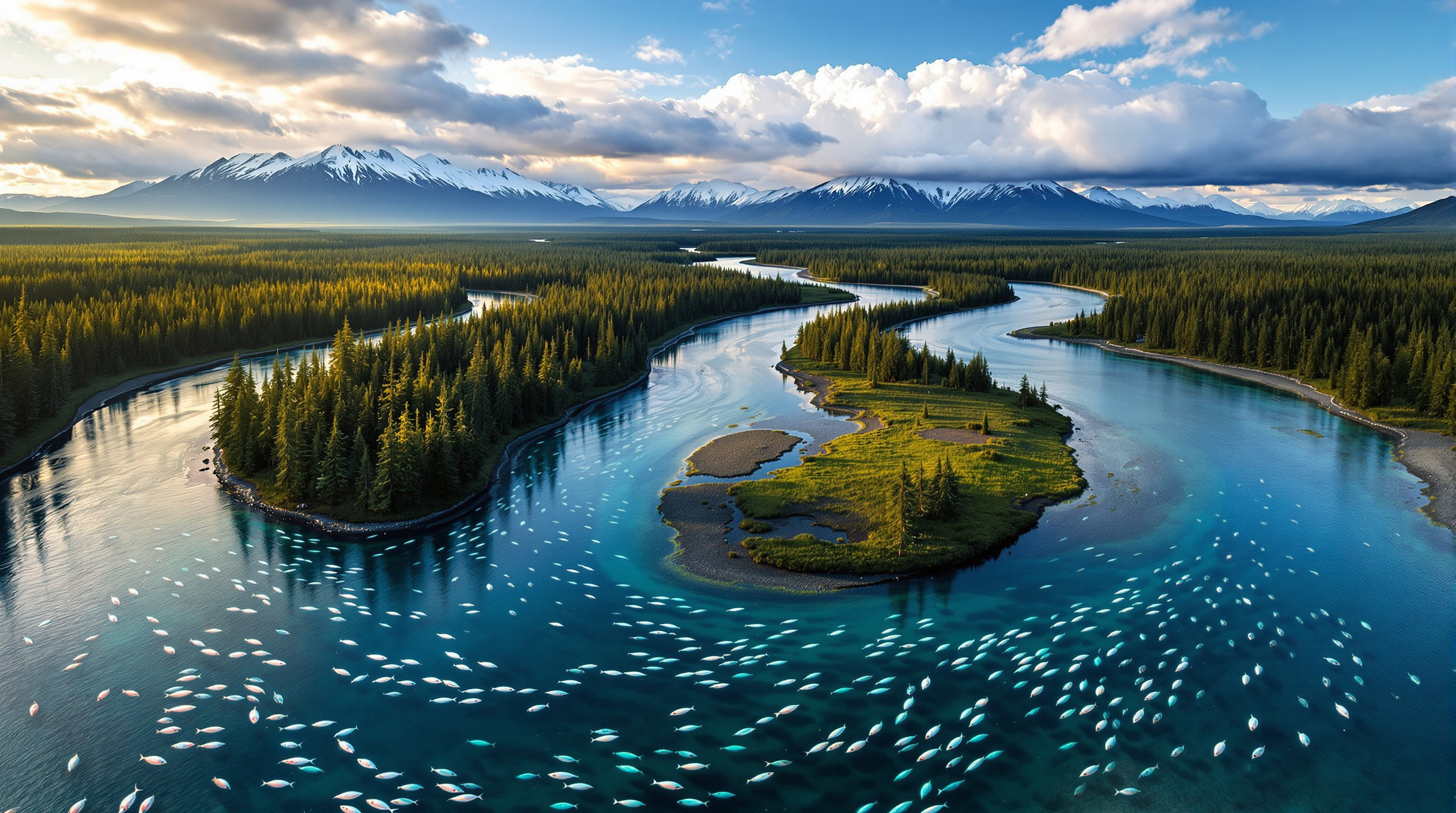
The Salmon Life Cycle
Understanding sustainability requires appreciating the remarkable salmon life cycle. Pacific salmon are anadromous, meaning they are born in freshwater, migrate to the ocean to mature, and return to their natal streams to spawn and die. This cycle has continued unbroken for millions of years.
Each species follows a different timeline. Sockeye typically return to fresh water after 2 to 3 years at sea and Chinook are typically 3 or 4 years old when they return to spawn, while Pink salmon complete their entire life cycle in just two years. Protecting salmon means maintaining healthy habitat throughout this entire journey - from mountain streams to the open Pacific and back again.
See NOAA Fisheries' sockeye and Chinook profiles for these timelines.
Habitat Protection
Sustainable salmon populations require healthy habitat. Alaska benefits from vast areas of undeveloped wilderness that provide pristine spawning and rearing habitat. Conservation efforts focus on:
- Protecting watersheds from pollution and development
- Maintaining riparian vegetation that shades streams and provides nutrients
- Ensuring adequate water flow for salmon migration and spawning
- Protecting marine feeding grounds from overfishing of prey species
The Marine Stewardship Council (MSC) has certified Alaska salmon fisheries as sustainable, recognizing the comprehensive management approach that protects both fish populations and their ecosystems.
Traditional Knowledge
Alaska Native peoples have depended on salmon for thousands of years, developing profound understanding of salmon behavior and ecology. This traditional ecological knowledge informs modern management and reminds us that sustainable fishing is not a new concept but a continuation of time-tested practices.
Subsistence fishing rights are protected in Alaska, ensuring that traditional uses of salmon continue alongside commercial and sport fisheries. This multi-use approach recognizes salmon's importance beyond economics - as food, culture, and identity for Alaska's indigenous communities.
Climate Change and Future Challenges
Rising ocean temperatures and shifting weather patterns present new challenges for wild salmon management. Warmer stream temperatures can stress returning salmon and reduce egg survival, while changes in ocean conditions affect the availability of prey species that juvenile salmon depend on during their marine phase.
Alaska's fisheries managers are adapting by expanding monitoring programs, adjusting escapement goals based on changing conditions, and investing in watershed restoration. The flexibility of Alaska's management system, which can adjust harvest levels in real time, provides a critical advantage in responding to these environmental shifts.
In May 2026, NOAA Fisheries found listing under the Endangered Species Act not warranted for three Gulf of Alaska Chinook groups. Environmental variability was their greatest threat; each had low extinction risk.
The Yukon River agreement suspends directed Chinook fisheries for seven years. Our Yukon River salmon guide explains its scope and limited ceremonial provisions.
The Certified Sustainable Choice
When you choose wild Alaska salmon, you're supporting one of the world's most responsibly managed fisheries. Look for the Marine Stewardship Council (MSC) blue fish label or the Alaska Seafood Marketing Institute's "Wild Alaska" logo to ensure your salmon comes from these certified sustainable sources.
The MSC Alaska salmon record lists certification since October 1, 2000, expiring November 10, 2029. Listed methods include gillnets, purse seines, trolling and fishwheels. Certification should be checked against the specific fishery record.
By choosing sustainable wild salmon, you vote with your dollars for fishing practices that will ensure healthy salmon populations for generations to come. Learn more about wild vs farmed salmon or explore the Pacific salmon species.